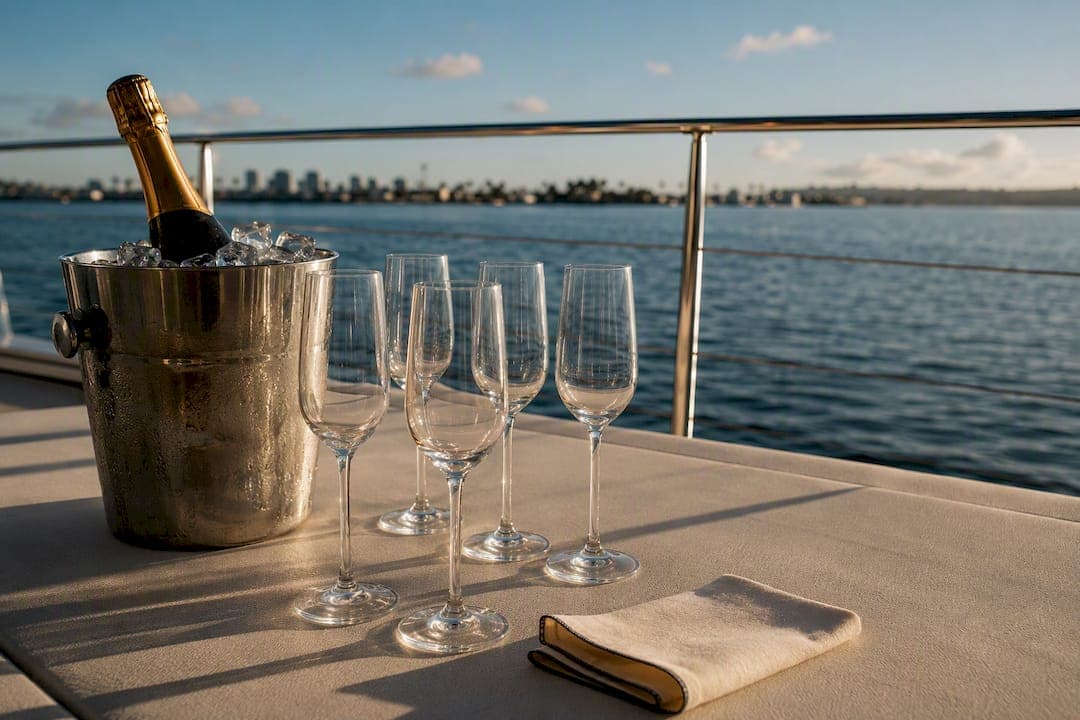
Yes, champagne belongs on a private sailing charter, and most operators either provide it or welcome you bringing your own. The real question is logistics: confirm chilling capacity, glass restrictions, and corkage policy before you board, since these small details decide whether your toast feels effortless or chaotic.
TL;DR:
- Most private sailing charters either provide champagne or allow guests to bring their own, but it is essential to confirm corkage fees and glass policies beforehand.
- Plan on approximately one bottle of champagne for every five guests for a toast, and include extra bottles for longer celebrations to avoid running out.
- Champagne should be chilled to 45 to 50°F using a water-ice-salt mixture for optimal taste, and pouring in stages enhances the drinking experience.
- Use shatterproof glasses and aim the cork away from guests when opening bottles to ensure safety on a moving deck.
- Arranging a fully catered celebration with a private operator simplifies logistics, guarantees a timely toast, and ensures all safety and etiquette guidelines are followed.
Table of Contents
- What to Expect From Champagne Service on a Charter
- How Many Bottles Should You Bring?
- How Do You Chill and Serve Champagne on a Moving Deck?
- Safety and Etiquette Every Guest Should Know
- What About Nonalcoholic Options and Balance?
- When Should You Pop the Cork?
- Your Pre-Charter Checklist
- Captain Liz’s Notes From the Helm
- Book a Celebration Charter With Sterling Sails
- Sources
- FAQ
What to Expect From Champagne Service on a Charter
Every operator handles bubbly a little differently, and it pays to ask before you show up with three bottles and no plan. Some charters build a complimentary toast into the price. Others sell beverage packages by the bottle, and a few runs strictly BYO, meaning you supply everything and the crew simply pours.
Crew members typically store bottles in a dedicated cooler or the galley fridge, handle the pour once you’re settled, and manage cork disposal and glass cleanup so nobody’s scrambling for a trash bag mid celebration. That division of labor is part of what makes a private celebration charter feel effortless instead of like a floating potluck.
Before booking, ask the operator these questions:
- Is champagne complimentary, or is there a corkage fee for outside bottles?
- What’s the delivery window, and can the galley chill bottles that arrive already at room temperature?
- Is glassware provided, or should guests bring their own drinkware?
- Are there restrictions on how much alcohol guests can bring aboard?
How Many Bottles Should You Bring?
A single toast doesn’t need much. One 750 ml bottle comfortably pours six to eight guests, since a proper serving is a few ounces, not a full glass. Once the trip stretches past two hours and turns into an actual celebration rather than a quick clink of glasses, the math changes fast.
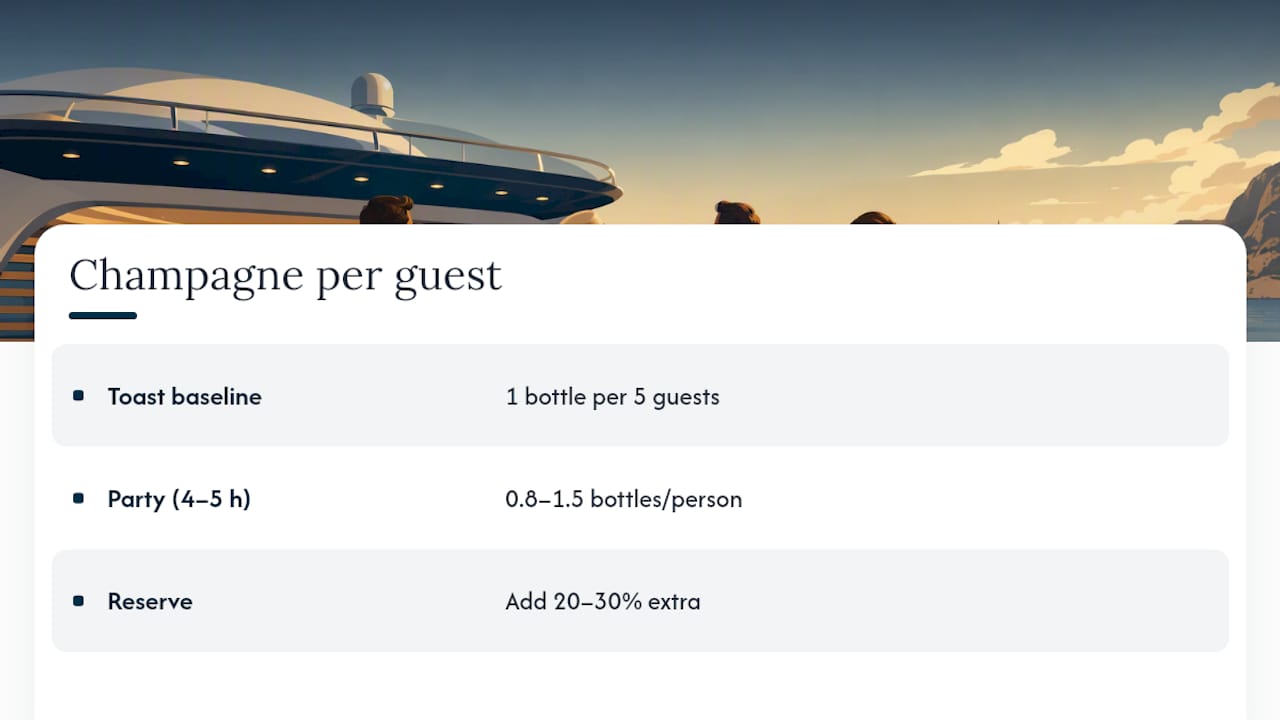
A workable baseline: for a straightforward toast, plan on one bottle per five guests. For a party style charter running four to five hours, provisioning guides suggest closer to 0.8 to 1.5 bottles per person, depending on how festive the group is and how warm the day runs, plus a reserve of 20 to 30 percent so you don’t run dry an hour before docking.
Coordinate delivery with the marina or the crew directly. Bottles dropped off warm an hour before departure won’t hit serving temperature in time, so build in a buffer or ask if the boat can chill them dockside before you arrive.
How Do You Chill and Serve Champagne on a Moving Deck?
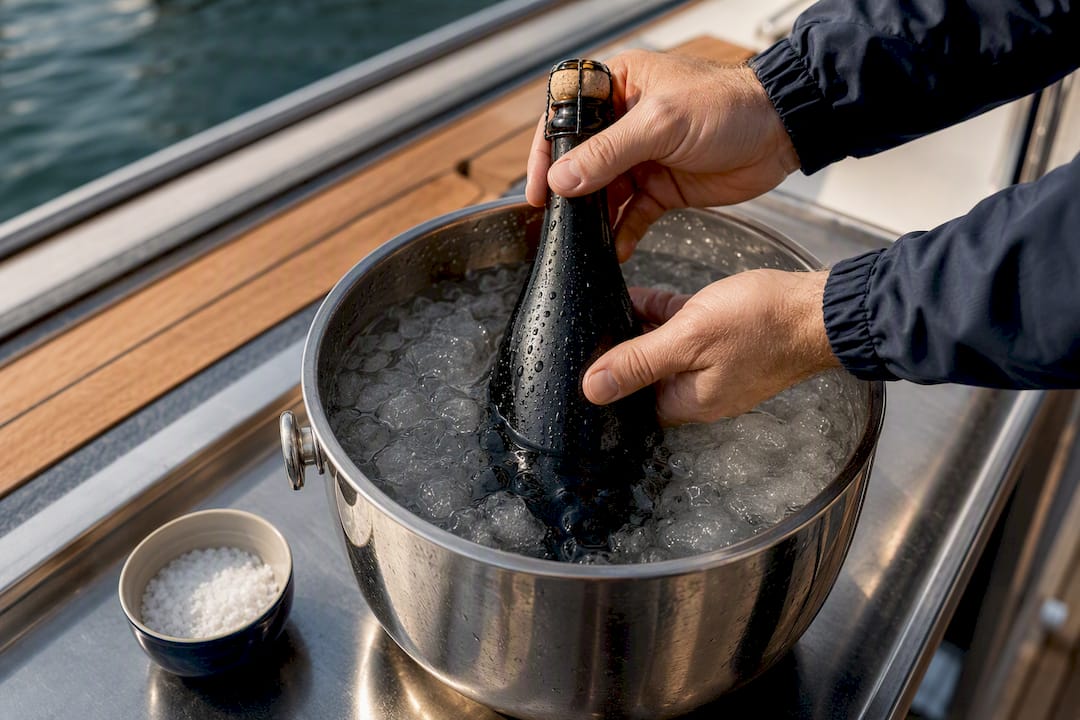
Champagne tastes best around 45 to 50°F, cold enough to keep the bubbles tight without numbing the flavor. If your bottle arrives warm, a bucket of half crushed ice and half water with a handful of kosher salt chills it far faster than ice alone, often shaving fifteen minutes or more off the wait.
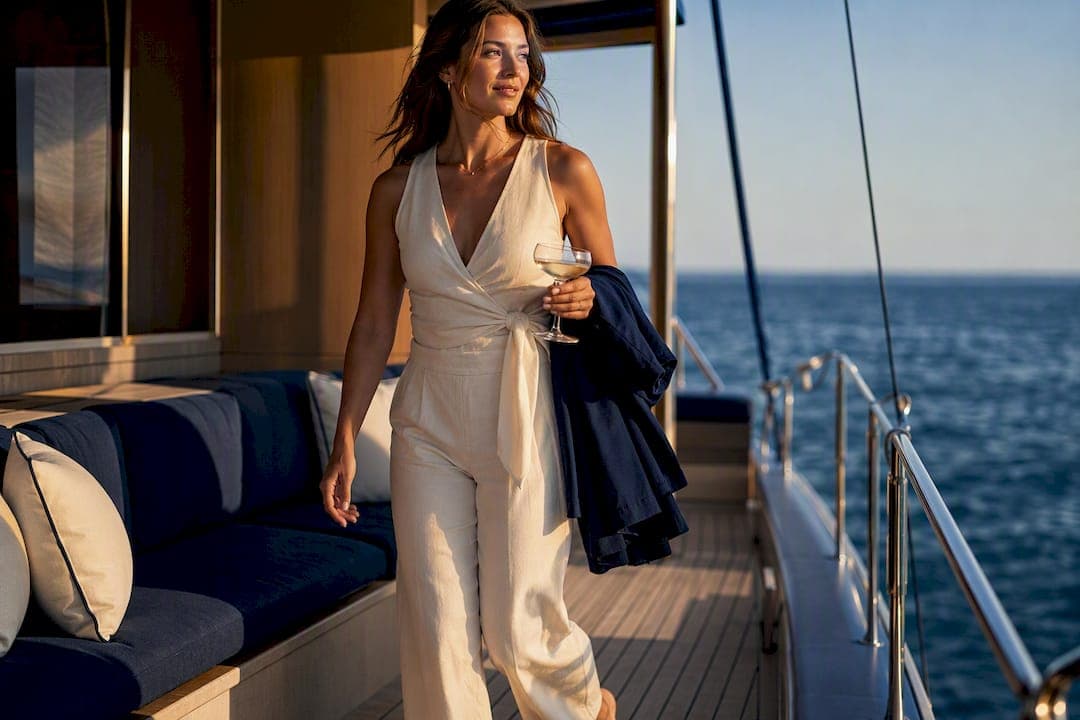
Glassware matters more than most guests realize. Tulip shaped glasses are the smart choice on the water because their narrower opening holds aromatics in and their lower center of gravity makes them more stable than a tall flute when the deck shifts underfoot. Many charters swap glass for shatterproof acrylic or polycarbonate flutes anyway, which look nearly identical and eliminate the broken glass risk entirely.
Pour in stages rather than filling the glass. A few key habits:
- Fill each glass about one third full, leaving room for the foam to settle.
- Pour again once the first round has been enjoyed, rather than topping off a full glass.
- Brace your pouring arm against a rail or table leg when the boat rocks.
- Hand glasses directly to guests instead of setting them down on a moving surface.
Pro Tip: Start with a small pour rather than filling the glass. Guests appreciate the aromatics more, and you won’t waste a chilled bottle if half the group only wants a sip before switching to water.
Safety and Etiquette Every Guest Should Know
Opening a bottle on a boat calls for the same caution you’d use anywhere, with one addition: always aim the cork toward open water, never toward another guest or the cabin. Loosen the foil, keep a firm palm over the cork, and rotate the bottle rather than the cork itself. That slow, controlled twist is what keeps a celebratory pop from turning into an eye injury.
Glass is often restricted on deck for good reason. A dropped flute on a rocking boat becomes shards on a walking surface, which is far more dangerous at sea than in a kitchen. Stick to the shatterproof glassware the crew provides, and treat any glass restriction as a safety rule rather than a style preference.
A few conduct habits keep everyone happy:
- Follow the crew’s directions immediately if seas pick up, even mid toast.
- Report a spill right away instead of trying to clean it yourself near the rail.
- Avoid walking with an open glass through narrow passageways or near the helm.
- Don’t assume you can grab items from the galley without asking. Etiquette guides for chartered vessels consistently note that crew areas and service are the crew’s call, not the guests’.
What About Nonalcoholic Options and Balance?
Not every guest drinks, and a good host plans for that rather than treating it as an afterthought. Nonalcoholic sparkling wines have improved dramatically, and premium options let you keep the ritual of a toast going without leaving anyone out. Sparkling ciders and craft sodas work well too, especially for younger guests or a designated skipper of the group’s own car later.
Pair the champagne with water. Set a bottle of water in every guest’s hand alongside their glass, and add electrolyte drinks if you’re out for several hours in the sun. Light bites like cheese, crackers, and fruit slow absorption and keep the mood pleasant instead of sloppy. Alcohol service to anyone under 21 is illegal regardless of setting, and operators are responsible for enforcing that rule aboard their own vessel.
When Should You Pop the Cork?
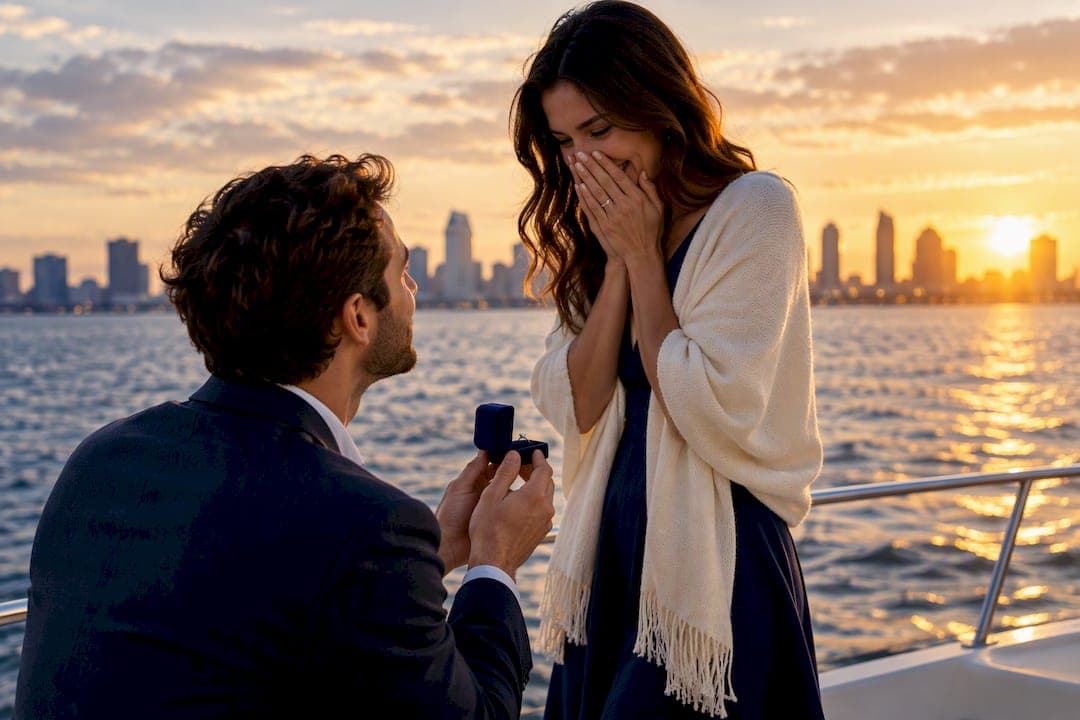
Timing turns a bottle of champagne into a memory. The strongest moments are right after leaving the dock, when a landmark comes into view, at sunset as the light turns gold, or in the instant right after a proposal. A well-timed pour, rather than one poured too early, is what makes the photo and the moment line up.
Keep the toast itself short. One to three sentences is plenty: “To new beginnings, and to the water that got us here” works for almost any occasion. For a birthday, try “Here’s to another year, and to doing it exactly like this.” Tell the captain your plan ahead of time so the boat can be positioned for the shot and the crew isn’t caught mid-maneuver when the cork goes.
Your Pre-Charter Checklist
A little prep turns a good afternoon into an easy one. Confirm the essentials, then pack accordingly.
- Ask the operator about corkage fees, glass policy, and chilling capacity.
- Confirm the delivery window so bottles arrive with time to chill.
- Pack cups or confirm shatterproof glassware is provided.
- Bring napkins, a trash bag, and extra water bottles.
- For a 2-hour sunset trip with six guests, a simple order looks like: 2 bottles of champagne, 1 nonalcoholic sparkling option, 6 bottles of water, ice, and light snacks.
Captain Liz’s Notes From the Helm
Timing a toast well is mostly about reading the moment, not the clock. The best pours happen right as the skyline slides past or the light starts turning amber, and a captain who’s paying attention will slow the boat just enough to let that happen without anyone noticing the adjustment.
Every celebration charter through Sterling Sails includes complimentary champagne, a fully private setting, and a USCG certified captain who coordinates the pour around your itinerary rather than the other way around. What guests underestimate most is how much a chilled bottle and a quiet, well timed moment matter more than the label on the champagne itself. Keep the cork aimed at the water, keep glasses in hand near the rail, and let the crew handle the rest.
— Captain Liz
Book a Celebration Charter With Sterling Sails
A celebration charter is the alternative to piecing together your own boat, cooler, and playlist. Every celebration charter comes fully private, with a USCG certified captain and complimentary champagne already built into the trip, so you show up and everything from chilling to pouring is already handled.
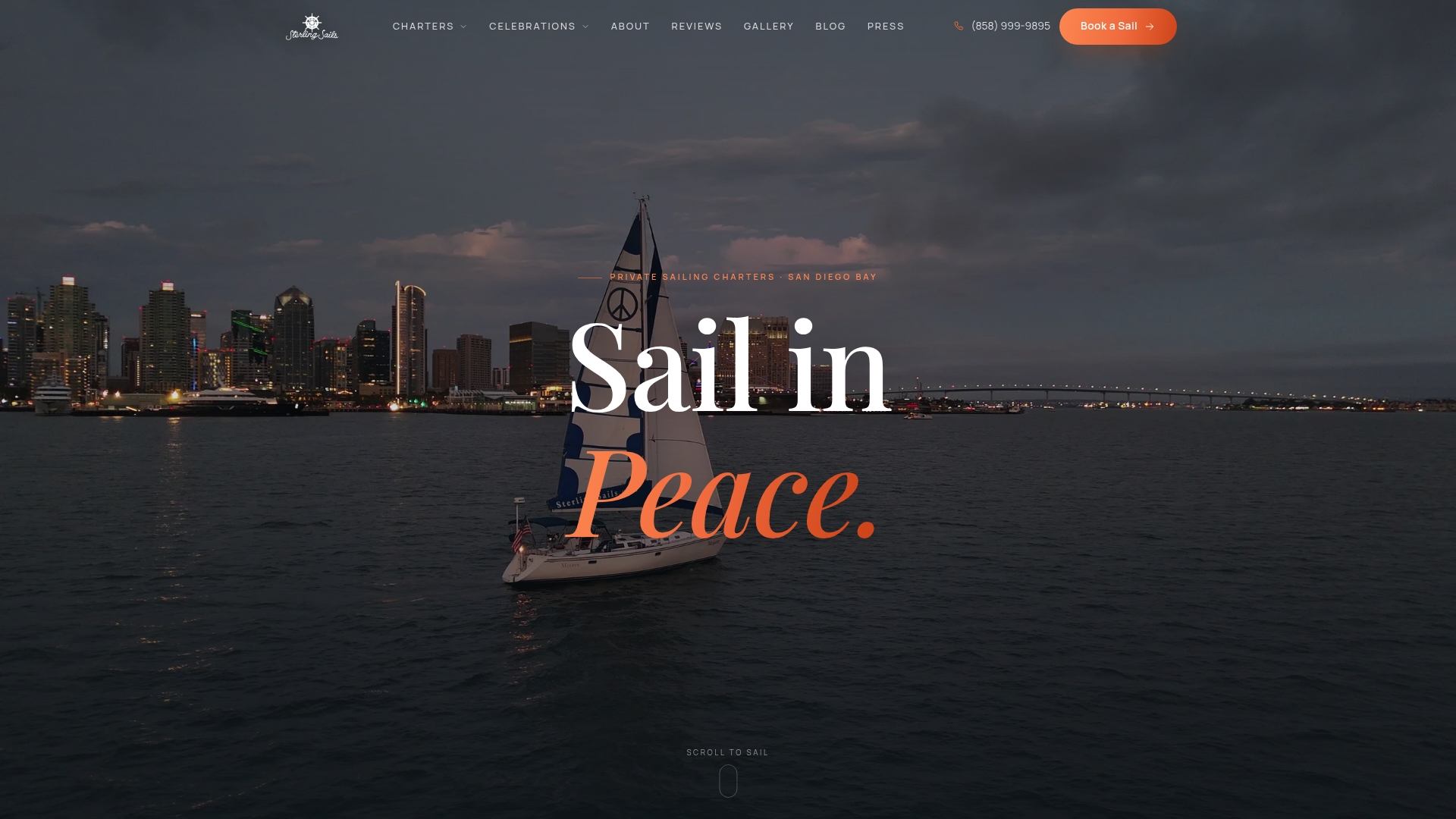
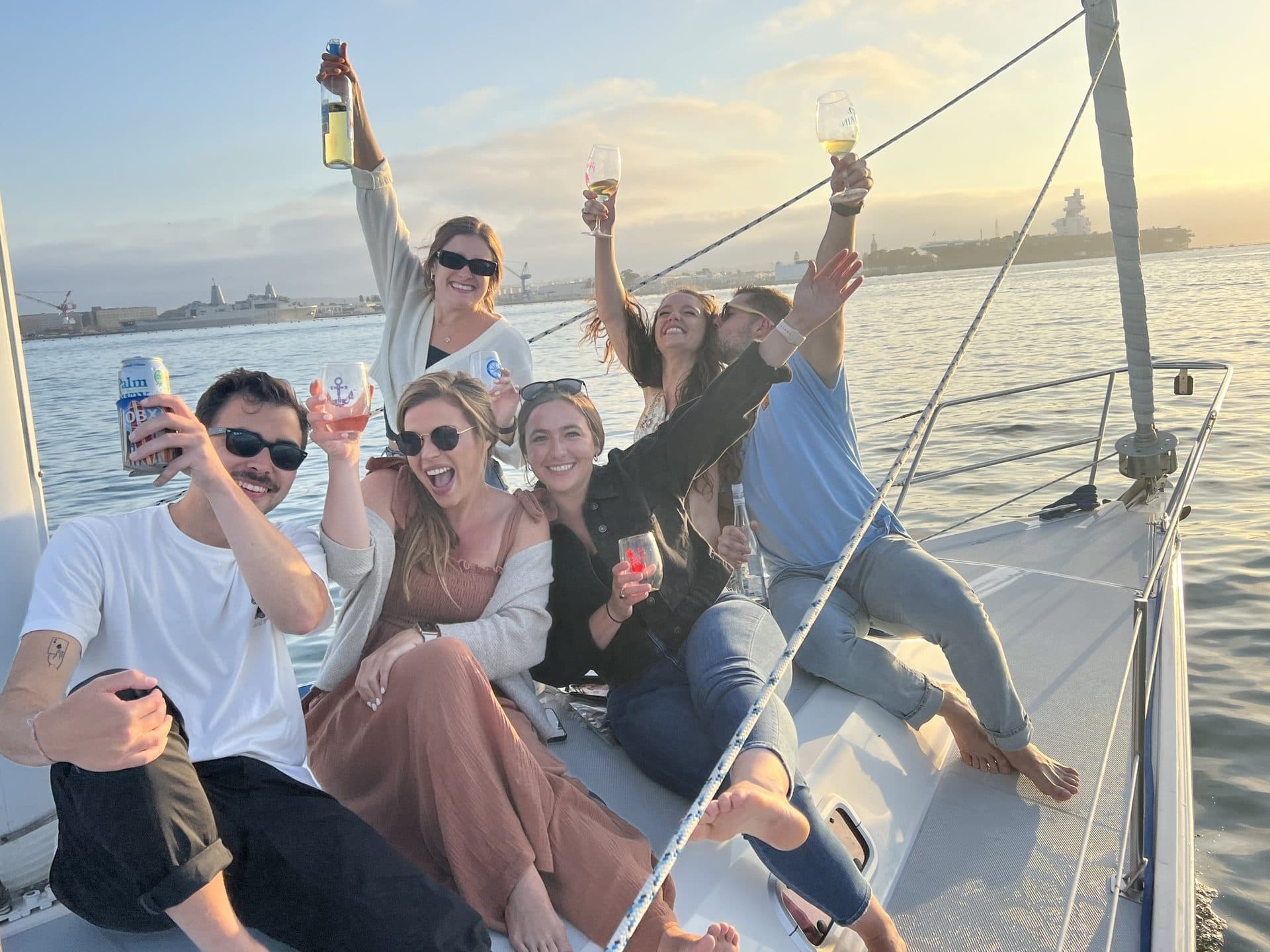
Whether you’re planning a proposal at sunset, a bachelorette afternoon on the bay, or a birthday toast with friends, you can browse the full lineup of sailing adventures and pick the length and style that fits your group of up to six. Check available dates and book your charter directly to lock in your preferred time slot before the season fills up.
Sources
Provisioning figures, chilling technique, and safety guidance draw from YachtWorld’s serving guide, Miami Wine Banks’ charter glassware tips, and Boat International’s guest etiquette guide.
- Champagnes for Miami yacht charters — service and glassware tips
- The ultimate guide to hosting a private celebration at sea
FAQ
Is Champagne Allowed on a Private Sailing Charter?
Champagne is welcome on most private charters, whether it’s complimentary or brought aboard by guests. Confirm the specific policy with your operator, since corkage fees and BYO rules vary from one company to the next.
How Many Bottles of Champagne Do I Need for Six People?
For a simple toast, one bottle covers six to eight guests comfortably. For a longer, party style trip, plan on roughly one bottle per person or slightly less, plus a reserve bottle in case the celebration runs long.
Can You Drink Champagne on a Boat in California?
Adults 21 and over can drink alcohol aboard a private vessel in California waters, though the boat’s operator sets the specific onboard rules. Complimentary champagne is often included with celebration charters as part of a fully private experience.
Why Do Boats Restrict Glass Drinkware?
Broken glass on a moving deck is a real hazard, since a rocking boat can send a dropped flute skidding across a walking surface. Most charters use shatterproof acrylic or polycarbonate glasses that look nearly identical to real crystal.
What’s the Best Temperature to Serve Champagne on a Boat?
Champagne tastes best chilled to about 45 to 50°F, cold enough to keep the bubbles crisp without dulling the flavor. A bucket of ice, water, and salt chills a warm bottle faster than ice alone if you’re short on time before the toast.