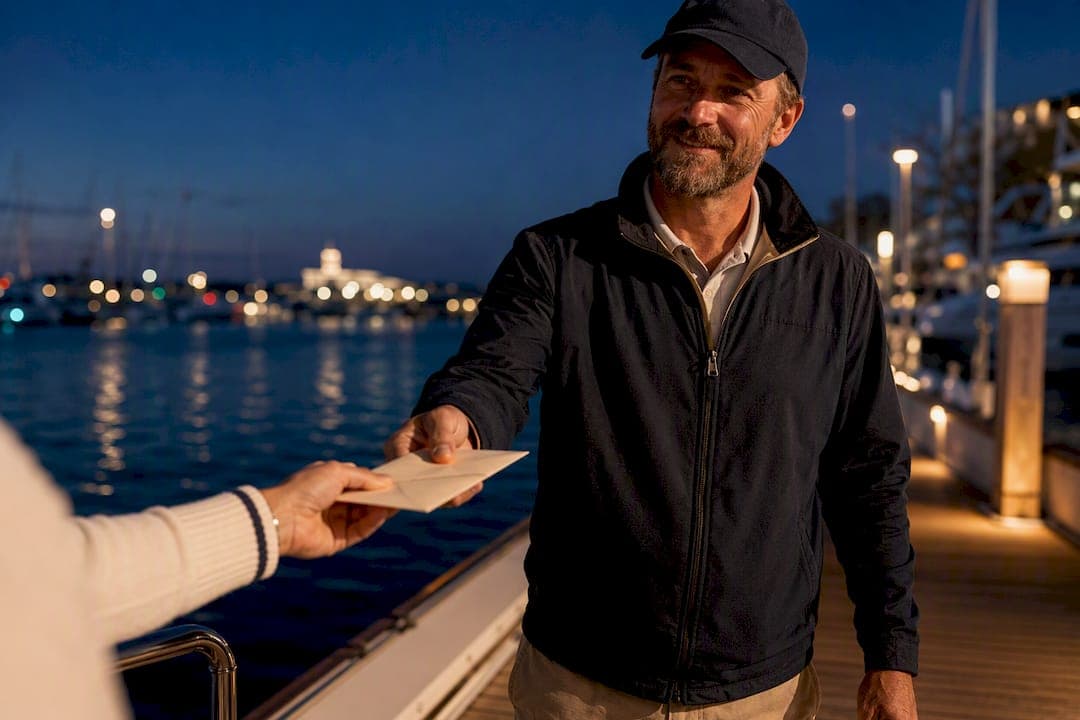

Dress yacht casual: polished but relaxed, built for sun and salt air. Choose quick-dry fabrics, light layers, and shoes with soft, non-marking soles. Skip pure cotton and anything with a hard sole or a spike heel. Sun protection is non-negotiable. If the invitation says cocktail or black-tie, step it up with a blazer or a sleek dress, but keep the shoes sensible.
TL;DR:
- Natural fabrics such as linen, merino wool, and UPF-rated shirts are best for moisture control and UV protection on the water, while cotton should be avoided.
- Wearing soft, non-marking rubber soles or espadrilles ensures safety and deck protection; stiletto heels, flip-flops, and hard-soled shoes are unsafe and damaging.
- Pack one versatile dress or button-down and one swim cover-up to transition smoothly from daytime activities to evening plans without overpacking.
- Sun protection should include polarized sunglasses with straps, a wide-brim hat, and reef-safe sunscreen applied regularly, especially due to reflective UV rays.
- Dress codes vary from nautical casual with polo shirts and chinos to resort or cocktail attire, but comfort and practicality are key across all scenarios.
Table of Contents
- Women’s Yacht Attire: What Actually Works on Deck
- Men’s Yacht Attire: Day to Evening Without Overthinking It
- How Do You Dress for Different Parts of a Yacht Day?
- Which Fabrics Belong on a Boat, and Which Don’t?
- What Shoes Should You Wear on a Yacht?
- What Sun Protection and Accessories Do You Actually Need?
- How Should You Layer for Changing Conditions on the Water?
- What Should You Pack for a Day on a Yacht?
- Captain Liz’s On-the-Water Etiquette Notes
- Reading the Room: How to Match Your Outfit to the Boat
- Sterling Sails: A Simpler Way to Enjoy a Day on the Water
- Sources
- FAQ
Women’s Yacht Attire: What Actually Works on Deck
A private yacht rewards outfits that move easily between sun deck and dinner table. The trick is choosing pieces that transition without a full wardrobe change.
For daytime, a swimsuit under a linen cover-up with closed leather sandals or espadrilles covers most of an afternoon on the water. A wrap dress, a lightweight button-down worn open over the suit, or a sarong knotted at the hip all work as quick transition layers when the sun starts dipping and dinner is on the horizon. For evening, a midi or wrap dress paired with a low block heel reads elevated without turning the deck into a hazard. Skip anything with a train, a stiff structure, or a heel thinner than a pencil.
Jewelry should stay minimal. Small hoops or studs survive wind and salt spray; dangling statement pieces do not.
- Cover-up + swimsuit + closed sandal (day)
- Wrap dress + block heel + light cardigan (evening)
- Sarong or button-down as a quick swim-to-dinner layer
Pro Tip: Thread a hairband through your hat’s inner sweatband and knot it under your chin, or clip a scarf around the brim. A hat over the rail is a hat you never see again.
Men’s Yacht Attire: Day to Evening Without Overthinking It
Daytime on a private charter calls for a linen-blend shirt or a soft polo, paired with chino shorts or lightweight chinos. Quick-dry swim trunks work fine if swimming is on the itinerary, and they beat cotton trunks for drying speed alone.
As the sun sets, swap shorts for linen trousers or chinos and add a collared shirt. A lightweight blazer covers anything labeled cocktail or resort formal without weighing you down in warm coastal air.
- Linen shirt or polo + chino shorts (day)
- Chinos or linen trousers + collared shirt, blazer optional (evening)
- Boat shoes or loafers with non-marking soles, plus polarized sunglasses
Keep the shoe count simple: one pair of deck shoes covers day and night. Save the loafers for a strictly indoor, no-spray event.
How Do You Dress for Different Parts of a Yacht Day?
The sun deck and the interior salon call for two different mindsets. On deck, swimwear and cover-ups are standard. Step into an air-conditioned salon for lunch, and a cover-up or light shirt over the swimsuit is the polite move, even on a casual charter.
Invitations use vague language, but the swaps are specific:
- Nautical casual — polo or linen shirt, chino shorts or trousers, boat shoes.
- Resort — a sundress or linen shirt with tailored shorts, sandals or espadrilles.
- Cocktail — a midi dress or blazer with trousers, low heels or dress loafers with soft soles.
To move from swim to dinner without hauling a suitcase of outfit changes, a sarong, a wrap dress, or a button-down that layers straight over a swimsuit does the job. Pack one dressier top or dress and one dressier bottom. That’s usually enough to cover a full day, from a morning swim to sunset cocktails, especially if you’re aboard for a shorter sunset cruise rather than an all-day charter.
- Bring one swap piece for lunch indoors
- Bring one swap piece for evening
- Leave the rest of the wardrobe at home
Which Fabrics Belong on a Boat, and Which Don’t?
Quick-dry synthetics and technical blends beat natural fiber almost every time on the water. Cotton absorbs water and stays wet, turning heavy and cold the moment spray hits it, which is exactly the opposite of what you want three hours from shore.
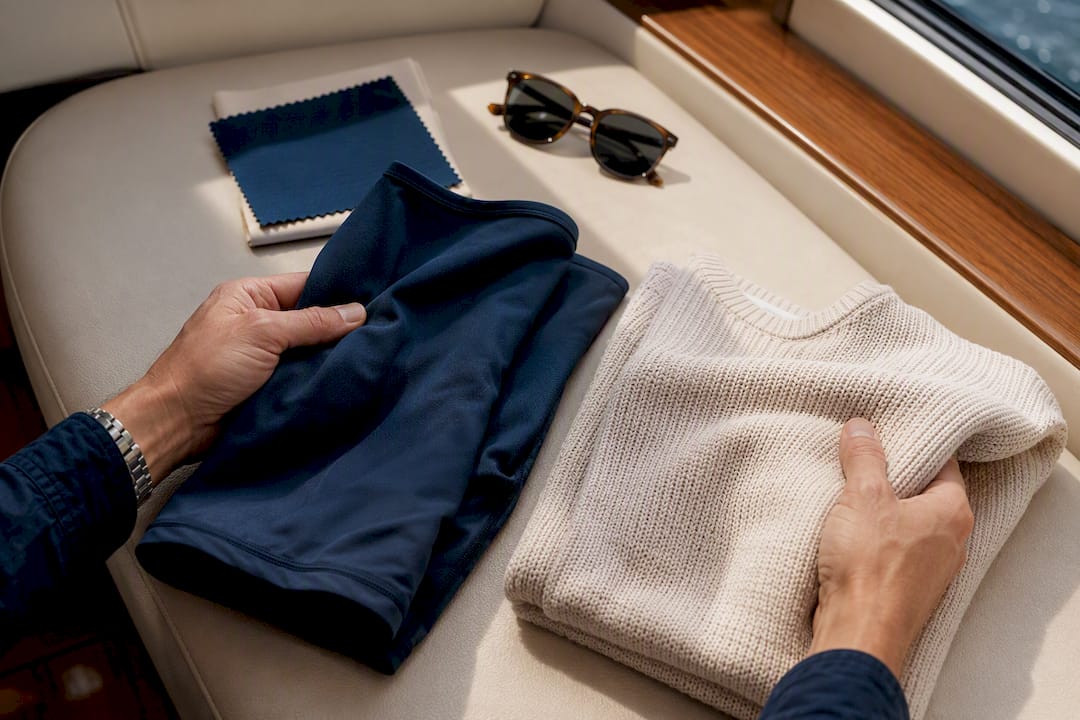
Linen works fine for a dry, sunny afternoon but turns limp and clingy the moment it gets wet. Merino wool handles temperature swings well for an evening layer since it stays warm even damp. UPF-rated clothing is worth the investment for long exposures. UPF 50+ blocks most UV radiation, which matters more than most people assume.
Water reflects UV rays back up at you, doubling your exposure compared to standing on solid ground. That’s why reef-safe sunscreen with non-nano zinc oxide or titanium dioxide matters as much as any single item of clothing you pack.
- Choose: technical blends, merino, UPF-rated shirts
- Avoid: pure cotton, anything with a heavy weave that traps water
What Shoes Should You Wear on a Yacht?
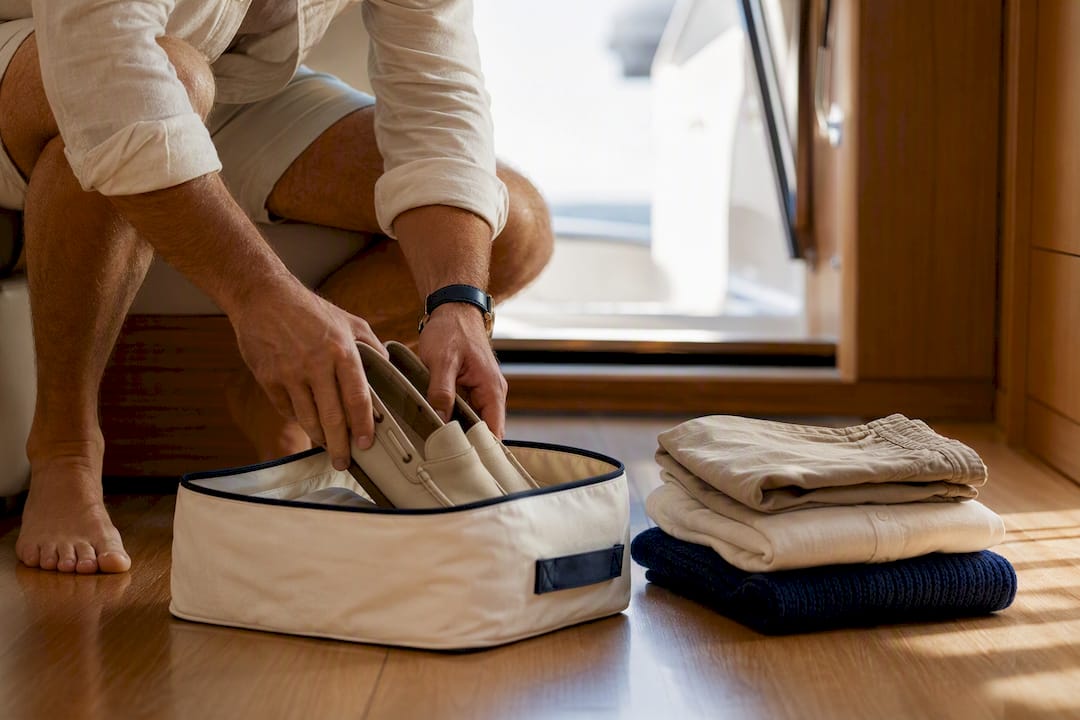
Soft, non-marking rubber soles are the standard, full stop. Hard black soles scuff and mark teak decking, and stilettos are both a tripping hazard and a puncture risk on fiberglass or teak.
Test your soles before you leave the house: press a fingernail into the rubber. If it doesn’t give slightly, it’s too hard for a deck. Flip-flops fail for a different reason. They slide off mid-step and offer no grip on a wet surface.
- Deck shoes, boat shoes, or soft-soled sneakers
- Espadrilles or leather sandals with a flat, flexible sole
- Skip stilettos, flip-flops, and hard-soled sneakers entirely
Sailing gloves reduce rope burn if you plan to handle lines. Entry-level grip gloves run around $10, while dedicated sailing gloves cost closer to $30 to $50.
Pro Tip: Bring your shoes in a separate bag from your clothes. Salt residue and a damp sole ruin whatever they touch inside a packed duffel.
What Sun Protection and Accessories Do You Actually Need?
Polarized sunglasses cut glare off the water and reduce eye strain over a multi-hour trip. Use a retention strap. Losing a $200 pair of sunglasses over the rail happens more often than anyone expects.
A wide-brim hat with a chin cord beats a baseball cap for coverage, especially across the ears and neck. Water reflects UV rays back up at you from below, which means sunburn risk on a boat runs higher than the same hours spent on a beach towel. Apply broad-spectrum SPF 30 or higher, reapply every two hours, and choose a reef-safe formula.
- Polarized sunglasses with a retention strap
- Wide-brim hat with a chin cord
- Reef-safe SPF 30+, lip balm with SPF, a small dry bag, a reusable water bottle
How Should You Layer for Changing Conditions on the Water?
A simple base, mid, outer system handles most of what a day on the water throws at you.
- Base layer: a moisture-wicking tee or tank that dries fast against skin.
- Mid layer: a light sweater or quarter-zip, merino if you have it, for when the wind picks up.
- Outer layer: a packable, waterproof, windproof shell. This is the single most useful piece you’ll pack, since it blocks both spray and wind in one layer.
Water temperatures and wind chill typically run 5 to 10 degrees cooler than shore, so pack that shell even on a warm, sunny forecast. A midday sail that feels balmy at the dock often feels ten degrees cooler once the boat picks up speed.
What Should You Pack for a Day on a Yacht?
A short list, saved to your phone, beats overpacking every time.
- Swimsuit and quick-dry cover-up
- One evening swap piece (dress or button-down)
- Two pairs of shoes, plus sandals
- Packable waterproof shell
- Polarized sunglasses, hat with retention strap, reef-safe sunscreen
- Small dry bag for phone and wallet
Soft-sided luggage packs easier than a hard suitcase in tight cabin storage, and it won’t scuff the deck if you’re setting it down anywhere.
| Item | Why it earns a spot |
|---|---|
| Quick-dry cover-up | Doubles as swimwear and daytime layer |
| Packable shell | Blocks wind and spray in one piece |
| Non-marking shoes | Protects decking, prevents slips |
| Reef-safe SPF 30+ | Cuts reflected UV exposure |
| Dry bag | Keeps electronics and cash dry |
Captain Liz’s On-the-Water Etiquette Notes
A few habits separate a relaxed guest from one the crew is quietly managing. Check your PFD fit before you leave the dock. A loose life jacket can slip off with raised arms, which defeats the entire purpose of wearing one.
If a crew member asks you to remove your shoes before stepping onto fresh teak, that’s about protecting the deck finish, not judging your footwear. Secure hats and sunglasses with a strap before any breeze catches them, and keep bags off upholstered seating below deck. Small courtesies like these keep the whole experience running smoothly for everyone aboard.
- Fit-check your PFD before departure
- Remove shoes if asked, without taking it personally
- Strap down hats and sunglasses before you’re on open water
- Keep wet gear off interior cushions
Pro Tip: If you’re unsure whether shoes come off, glance at the swim platform or entry point for a shoe rack. Most private charters signal it there rather than making an announcement.
— Captain Liz
Reading the Room: How to Match Your Outfit to the Boat
The clearest style cues arrive before you even board. Notice what the host is wearing, how polished the boat’s finish looks, and how the invitation is worded. A weathered sailboat and a gleaming motor yacht set very different expectations, even for the same “casual” dress code.
Neutral, quality pieces in navy, white, ivory, or sand read better across almost any private yacht setting than a trend-driven outfit ever will. When in doubt, choose comfort and grip over flash. Nobody remembers what you wore. They remember whether you slipped near the rail.
Sterling Sails: A Simpler Way to Enjoy a Day on the Water
Working out fabric, footwear, and layering for a yacht outing takes real thought, and that’s exactly the kind of planning Sterling Sails takes off your plate. Every private yacht charter typically features a certified captain, complimentary champagne, and a customizable itinerary that might include sunset cruises, wildlife tours, or celebrations on the water.
Because these charters are fully private without sharing the deck with strangers, guests often have direct input into the plan with clear expectations about the experience and appropriate dress. Browse the full lineup of sailing adventures to check dates and pick the experience that fits your group, from a relaxed afternoon sail to a full celebration charter.
Sources
- What to wear sailing for beginners — Nauticed Sailing Blog
- Sailing attire guide — Salty & Windy
- UV-protective boating clothing guide — Wakelanders
FAQ
What Is the 10 Percent Rule for Yachts?
The “10 percent rule” usually refers to annual yacht ownership costs, not attire, running roughly 10% of the purchase price per year in upkeep, crew, and docking. It has no connection to dress code and isn’t a styling guideline.
Is There a Dress Code on a Yacht?
Most private charters use a relaxed yacht-casual dress code: comfortable, sun-ready clothing with soft-soled shoes. Formal events or cocktail-labeled invitations call for a step up, like a blazer or a wrap dress, but even then footwear stays practical.
Why Do People Take Their Shoes Off on a Yacht?
Hard soles and grit can scuff or scratch teak decking and fiberglass surfaces, so many crews ask guests to go barefoot or switch to soft-soled deck shoes. It protects the finish and often improves your own grip on a wet deck.
What Should a Woman Wear to a Yacht Club?
A sundress, wrap dress, or tailored separates in neutral tones work well for daytime yacht club settings, paired with flat sandals or espadrilles. For evening events, a midi dress and a low block heel read polished without risking a twisted ankle on deck.