The most dependable place to see wild sea lions from shore in San Diego is Point La Jolla, the rocky stretch between La Jolla Cove and Boomer Beach. From the water, you can look for them along San Diego Bay and around Point Loma on a private sail, where the pace is yours and nobody is crowding the rail. Below: the shore spots, the seasons, how to tell a sea lion from a seal, the rules that protect the animals, and what a wildlife charter can and cannot promise.
TL;DR
- For a land view, go to the sidewalk at Point La Jolla and Boomer Beach. Children’s Pool is better known for harbor seals.
- California sea lions can be seen year-round, but early May through October is pupping season, when mothers and pups need extra space.
- Ear flaps and upright, flipper-assisted movement mean sea lion. No ear flaps and a belly wriggle mean true seal.
- Never touch, feed, chase or take selfies with the animals. Federal protections apply, and the City warns against it.
- Our 2-Hour Bay Wildlife Cruise is $600 per charter, fully private, for up to six guests. Sightings are possible, never guaranteed.
Table of Contents
- Where to see sea lions in San Diego
- Sea lion or seal? A two-second field test
- Are California sea lions rare?
- When to go
- Dolphins and the rest of San Diego Bay wildlife
- Watching from a private sailboat
- Wildlife etiquette that protects the animals
- Perspective: why we plan wildlife days the way we do
- Who a wildlife sail suits
- Book a private wildlife sail
- FAQ
- Sources
Where to see sea lions in San Diego
Point La Jolla and Boomer Beach
This is the answer most locals give, and the City backs it up. Point La Jolla is a rocky point that the City describes as a haul-out and pupping area for California sea lions. You will hear the barking before you see the animals. They sprawl across the rocks, slide into the swell and haul themselves out again as if the whole shoreline were their living room.
A few practical notes:
- Watch from the sidewalk and permitted overlooks. The City has closure measures at the Point La Jolla bluffs meant to protect the sea lions, so read the signs and barriers when you arrive.
- Bring binoculars or a zoom lens instead of walking closer.
- Expect the smell. A rookery is a working animal home, not a petting zoo.
La Jolla Cove
The cove is a very small, north-facing beach tucked between sandstone cliffs, and it sits inside the San Diego-La Jolla Underwater Park Ecological Reserve. The City notes visibility there can sometimes exceed 30 feet, and that visitors must follow local access rules and may not fish or remove objects. It is a lovely place to stand with a coffee and watch the coastline, and it is protected habitat first and a beach second.

Children’s Pool and Casa Beach
Many visitors assume everything here is a sea lion. It is not. Harbor seals are the animals more characteristically seen at Children’s Pool and Casa Beach, so do not mistake it for the main sea lion viewpoint.
The zoo question
Searchers sometimes land on the San Diego Zoo’s sea lion page and wonder about “lions” at the zoo. The wild animal along our coast is the California sea lion, a marine mammal, and the zoo’s big-cat lions are a different question entirely. If you want wild animals in their own element, the coast and the bay are where to look.
Sea lion or seal? A two-second field test
You can settle the argument on the sidewalk. According to the National Park Service, sea lions have visible external ear flaps and can rotate their hind flippers to walk on land, while true seals lack ear flaps and move on land by wriggling their bodies.
| What you notice | Sea lion | Harbor seal |
|---|---|---|
| Ears | Small visible flaps | Ear holes, hard to see |
| On land | Props up on front flippers, can walk | Wriggles along on its belly |
| Sound | Loud, repeated barking | Quieter |
| Where in La Jolla | Point La Jolla, Boomer Beach | Children’s Pool, Casa Beach |
In San Diego County, Wild San Diego’s local species guide lists the California sea lion (Zalophus californianus) and the harbor seal (Phoca vitulina). Worldwide, “sea lion” covers several species, including Steller, Australian, South American, New Zealand and Galápagos sea lions. Here, unless a naturalist tells you otherwise, the one in front of you is a California sea lion.
Are California sea lions rare?
No. San Diego’s own management plan states that California sea lions are not depleted under the Marine Mammal Protection Act and not threatened or endangered under the Endangered Species Act. The same plan cites a NOAA Fisheries estimate of 257,606 animals in the U.S. West Coast stock in 2014, growing about 7.0% a year. Treat that as a 2014 estimate, not a current census.
Common does not mean casual. The animals are federally protected, which is why the rules below matter.
When to go
Sea lions can be seen all year. The City says the pupping season typically begins in early May and concludes in October. During those months mothers and pups are bonding, nursing and learning to swim, and they are especially sensitive to disturbance.
For your own comfort, think in terms of light and tides rather than just months:
- Morning: soft light, fewer people on the sidewalk, and the animals often active.
- Late afternoon: warm light on the cliffs, and a good time to be on the water.
- Tides and conditions: NOAA advises checking season, time of day, tides and local access restrictions, because wildlife activity and closures vary.
On the bay itself, the same honesty applies. Nature keeps its own calendar, and we plan for it with a little slack in the schedule.
Dolphins and the rest of San Diego Bay wildlife
People who search for sea lions often want dolphins too. We will not hand you a month-by-month dolphin calendar we cannot source, and we will not promise a pod on any given afternoon. What we can say is what an experienced captain knows: wildlife on the bay and off Point Loma shifts with habitat, season, time of day and tide, so the best approach is a flexible route and a patient crew. Tell Captain Liz up front that dolphins and sea lions are the dream, and she will shape the day around the water you actually have.
If you are curious about the wider picture, our blog explains why private charters suit wildlife lovers, and our guide to local water activities covers what else is out there through the year.
Watching from a private sailboat
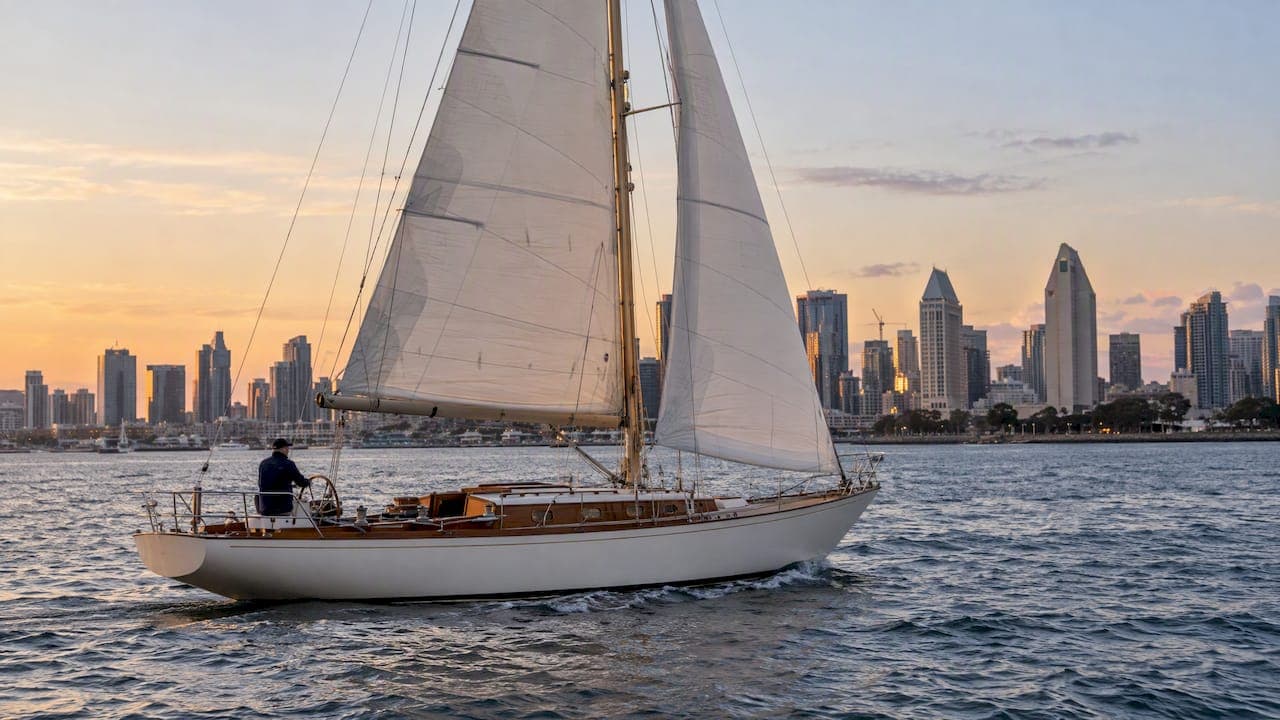
Shore viewing gives you the sound and the smell. A boat gives you something different: the long view of the coast, the skyline sliding behind you, and the quiet that comes when the engine is off and the sails do the work. On a sailboat you are a visitor drifting through their neighborhood, which tends to suit the animals as well as the guests.

We sail the classic 42-foot yacht Mojave on San Diego Bay, and every charter is private: just your group, up to six guests, a USCG-certified captain, and complimentary champagne and drinks. There is no shared deck and no commentary over a loudspeaker. The bay can feel like a pocket of calm water, and the point of a wildlife sail is to let it stay that way.
Choosing your length
Our wildlife cruises run on the Whale Watching & Wildlife Sailing page:
| Charter | Length | Price per charter |
|---|---|---|
| Bay Wildlife Cruise | 2 hours | $600 |
| Point Loma Expedition | 3 hours | $800 |
| Extended Voyage | 4 hours | $1,000 |
The 2-hour cruise is a gentle introduction to the bay. The 3-hour Point Loma Expedition gives you time to reach the headland and linger. The 4-hour voyage is for people who want to stop watching the clock. Prices are per charter, not per person.
The honest part: sightings are possible, not guaranteed. Longer trips give nature more chances to show up, but nothing on the water runs on a schedule.
Wildlife etiquette that protects the animals
The City of San Diego warns against touching sea lions and against taking selfies with them. A 2026 NOAA investigation into a viral video of an alleged assault on a sea lion at La Jolla Cove shows how seriously these cases are taken. A barking sea lion is a wild animal, and it can be unpredictable.
Our rules aboard, and good rules for anyone on the shore:
- Keep a quiet watch. Speak softly and let the animals set the tone.
- Never feed, chase or splash an animal.
- Never block an animal’s path to the water.
- Keep children supervised and close, especially near rocks and ledges.
- Photograph from a distance. The best shot is the natural moment: a bark, a raft of animals resting together, a slow dive.
Perspective: why we plan wildlife days the way we do
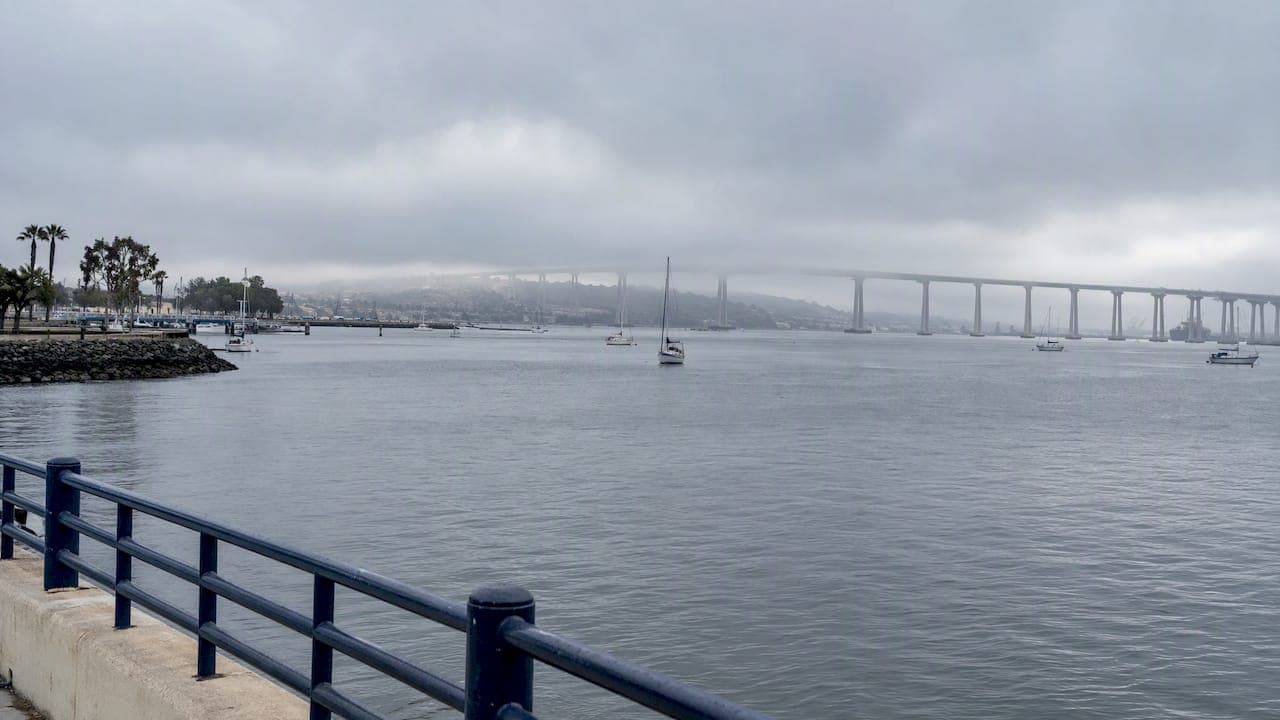
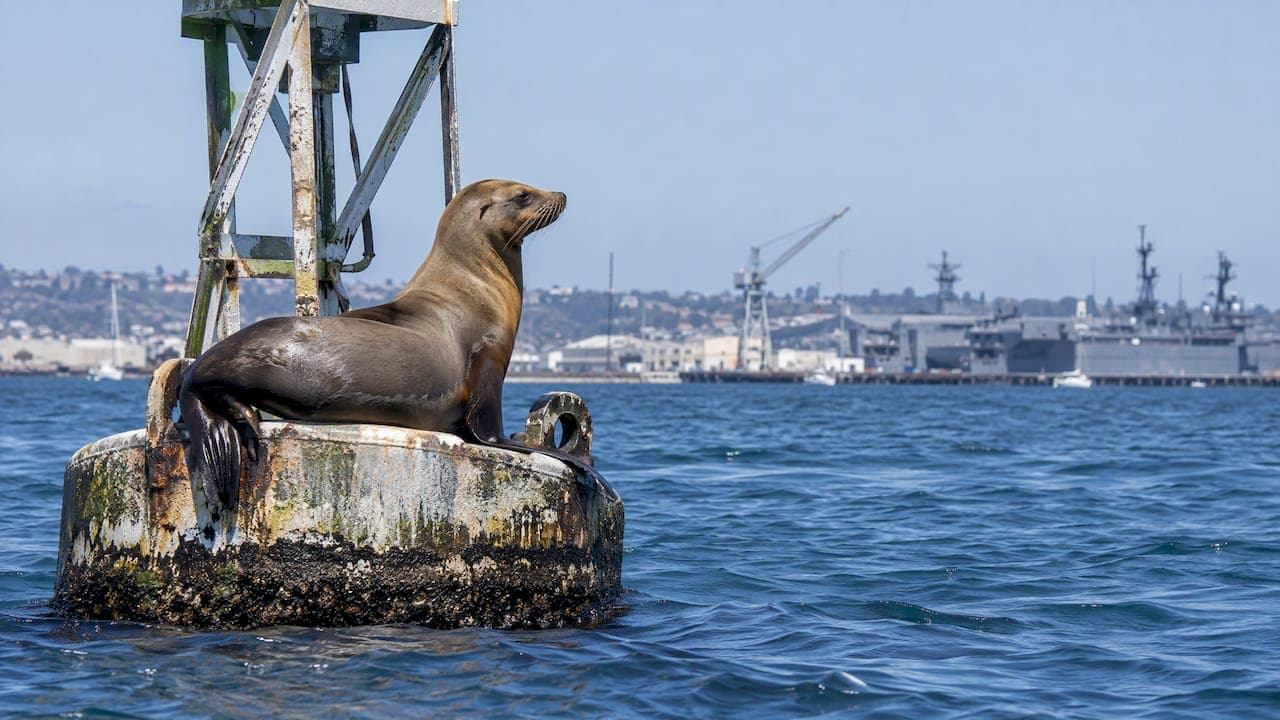
We have sailed this bay long enough to know that the best wildlife day is never the most forced one. We do not chase animals for a photo. We choose a heading, trim the sails, and let the water do the introducing. Sometimes that means a sea lion hauled out on a channel marker and a long, lazy look. Sometimes it means a quiet hour of pelicans, harbor light and the Coronado Bridge arching overhead. Both are good days.
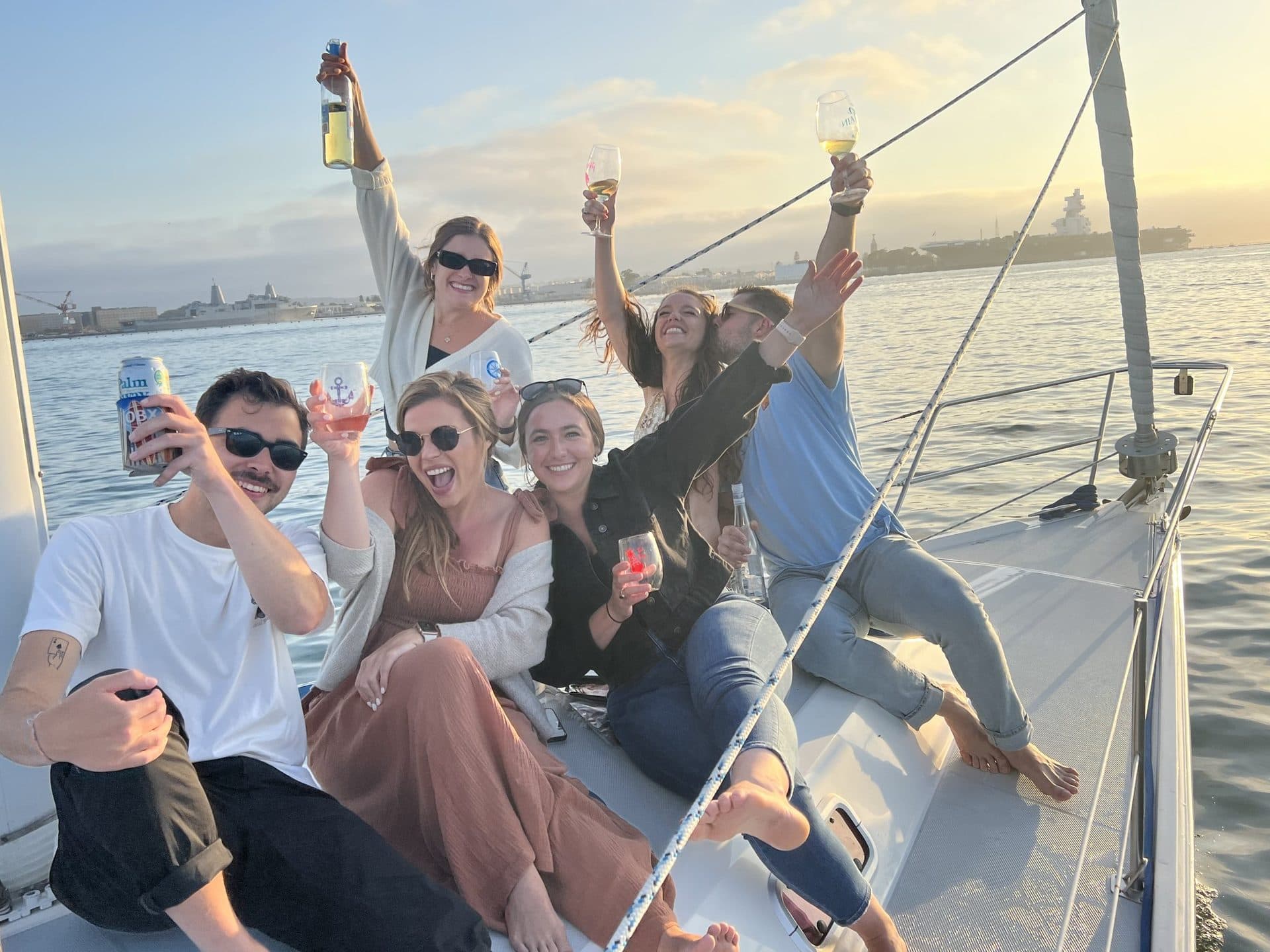
Because every charter is private, we can adapt on the spot. A couple wants stillness, a family wants the kids up front with binoculars, a bachelorette party wants karaoke and a toast with the skyline behind them. We shape the route to match, and we keep the animals’ space first.
Our advice: book the length of time that lets you relax, tell us what you hope to see, and let go of the checklist.
— Captain Liz
Who a wildlife sail suits
Couples
A wildlife cruise is quietly romantic. Think shared binoculars, a glass of champagne, and the point of land turning gold as the afternoon wanes. If you would rather aim for the evening, our sunset sailing options start at $600 for 2 hours, and you can ask us to start with wildlife and finish in the light.
Families
Kids love the barking and the boat. A family charter keeps the group private and the pace easy. For ideas on how to plan the layout and the brief for a day on the water with children, this family yacht charter planning guide is a useful read. On our boat, children stay supervised and we enforce the quiet-watch rule.
Friends and celebrations
Birthdays, engagements and bachelorette parties can all weave in a wildlife leg. Karaoke and a toast pair surprisingly well with a long look at the coastline. See our bachelorette charters for how that works, and note that a quiet watch near the animals still applies.
Book a private wildlife sail
If the sea lions are the reason you are here, our wildlife charters start at $600 for the 2-Hour Bay Wildlife Cruise, with the 3-Hour Point Loma Expedition at $800 and the 4-Hour Extended Voyage at $1,000. Each is fully private for up to six guests. You can compare everything we offer on the sailing adventures and prices page, or see the boat first in the gallery. Tell Captain Liz your plan, and we will build the day around it.
FAQ
Where is the best place to see sea lions in San Diego?
Point La Jolla, between La Jolla Cove and Boomer Beach, is the dependable public viewpoint. Watch from the sidewalk and permitted overlooks, and check signs and barriers when you arrive. For a view from the water, a private bay and Point Loma sail is a quieter alternative.
Are there sea lions in San Diego Bay?
Yes, they can be seen on the bay, though we never promise a specific sighting. Wildlife location and activity vary with habitat, season, time of day and tides. Longer charters give you more time to look.
When is the best time of year to see sea lions?
They can be seen year-round. The City says pupping season typically runs from early May through October, when mothers and pups need the most space. Visit with respect in those months and keep your distance.
Are California sea lions rare?
No. San Diego’s management plan states they are not depleted under the Marine Mammal Protection Act and are not threatened or endangered under the Endangered Species Act. They are still protected, so never touch or feed them.
What is the difference between a sea lion and a seal?
Sea lions have visible ear flaps and can rotate their hind flippers to walk on land. True seals lack ear flaps and wriggle along on their bellies. In La Jolla, sea lions gather at Point La Jolla, while harbor seals are more typical at Children’s Pool.
Sources
- Point La Jolla, City of San Diego
- La Jolla Cove, City of San Diego
- Long-Term Management Plan for Closure of Point La Jolla Bluffs
- The Seals and Sea Lions of San Diego County, Wild San Diego
- Seals and Sea Lions: What Is the Difference? National Park Service
- NOAA investigates viral La Jolla assault on sea lion, NBC 7 San Diego